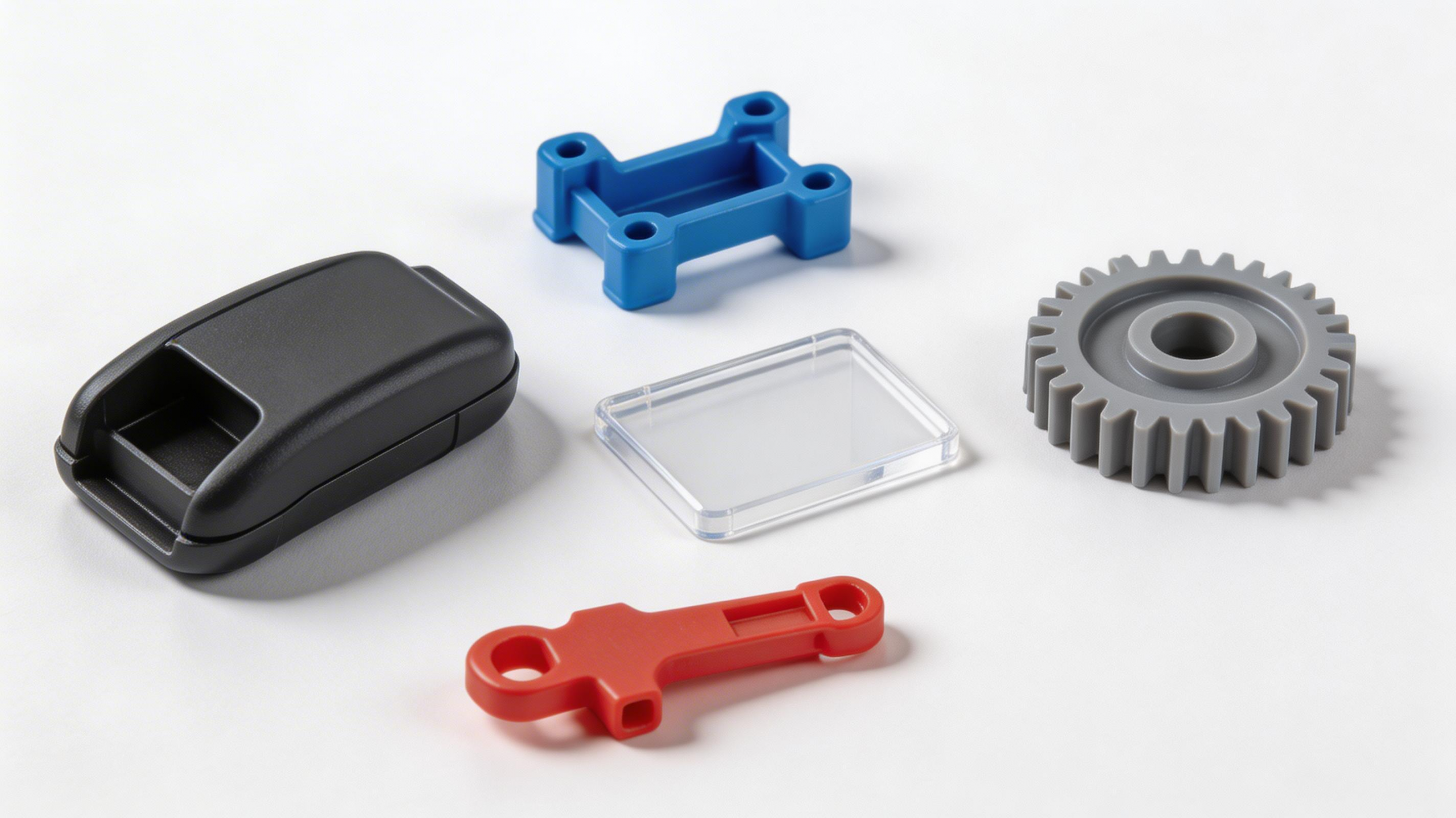
Standard abs plastic injection molding offers exceptional impact resistance and processability, yet the material inherently struggles against ultraviolet (UV) radiation. Without protection, the polybutadiene phase undergoes photo-oxidation, leading to yellowing (discoloration) and surface embrittlement. For engineers designing outdoor components—from automotive grilles to telecommunication housings—implementing a multi-layered defense strategy is critical. This involves combining internal compounding with robust secondary treatments like UV-resistant painting and film lamination to extend service life and maintain aesthetic quality under harsh environmental conditions.
Strategies for Internal UV Stabilization and Molding Precision
To prevent premature failure, manufacturers must embed stability at the molecular and processing levels. This section explores compounding additives and machine settings that preserve the polymer’s integrity against solar radiation while ensuring structural reliability.
Integrating Chemical Stabilizers and Physical Blockers
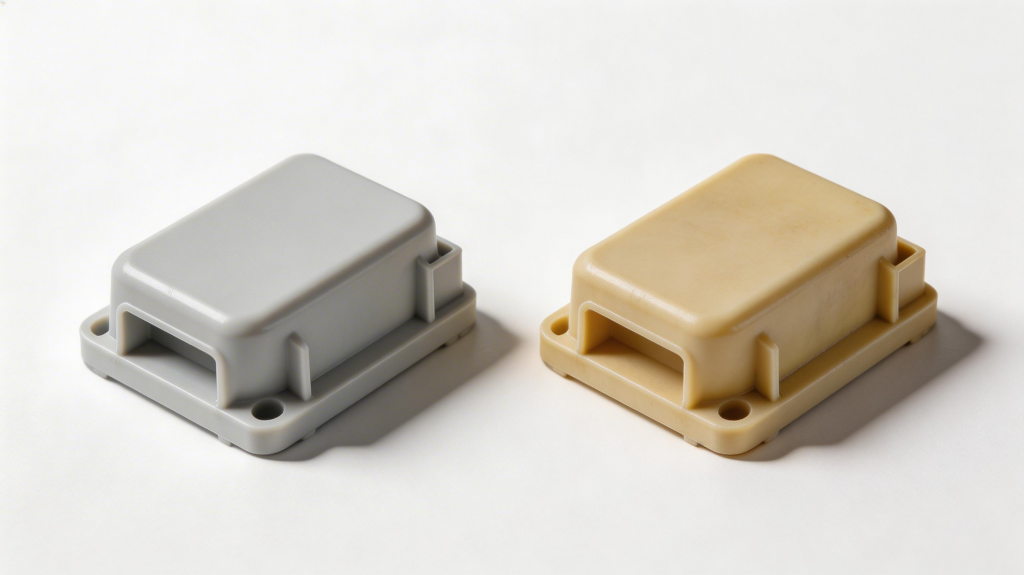
Effective internal stabilization begins during the compounding phase. The addition of Hindered Amine Light Stabilizers (HALS) is a primary defense; these compounds scavenge free radicals generated by UV exposure, halting the chain scission process. For optimal results, HALS are often combined with Benzotriazole UV absorbers, which dissipate harmful UV energy as low-level heat. Industry data suggests that a dosage ratio between 0.1% and 1.0% by weight significantly retards degradation.
Beyond chemical additives, physical blocking agents like carbon black provide a robust shield. Dispersing carbon black particles at a loading of 2.0% to 3.0% creates an effective barrier that absorbs UV radiation before it penetrates the polymer matrix. However, engineers must balance this loading to avoid compromising the mechanical impact strength of the injection molding abs components.
Optimizing Injection Parameters for Material Integrity
Processing conditions on the abs plastic injection molding machine play a pivotal role in retaining the efficacy of UV stabilizers. Excessive thermal stress during the plasticizing phase can degrade additives before the part is even formed. Operators must strictly control barrel temperatures and minimize residence time to prevent pre-molding breakdown. Furthermore, reducing screw rotation speeds helps limit shear heat generation, which safeguards the polymer chains.
precise process control not only secures material quality but also reduces scrap rates, thereby lowering the abs plastic injection molding carbon footprint associated with wasted resin and energy. Additionally, mold design features such as strategic venting prevent gas traps that could lead to localized burning, ensuring that the surface finish remains uniform and receptive to subsequent secondary treatments.
Implementing Robust Secondary Surface Protection Methods
When internal stabilization is insufficient for extreme exposure, external barriers provide the ultimate defense. The following methods detail how painting, coating, and lamination create impermeable shields for outdoor durability and superior aesthetic performance.
Application of UV-Resistant Paints and Coatings
Painting remains one of the most effective methods for protecting abs injection molded plastic parts. Surface preparation is critical; cleaning protocols must remove all mold release agents to ensure adhesion. Two-component (2K) polyurethane coatings are widely favored for their chemical cross-linking, which offers exceptional weatherability. Acrylic enamels also provide high UV-blocking efficiency for outdoor applications.
To ensure longevity, controlling the Dry Film Thickness (DFT) is essential. A consistent thickness prevents UV light from penetrating through thin spots. Testing protocols, such as ASTM G154 accelerated weathering cycles using fluorescent UV lamps, often validate these coatings. Passing criteria typically require a Color Shift (Delta E) of less than 3.0 after 300 to 3000 hours of exposure, ensuring the product retains its visual appeal over time.
Advanced Shielding with Lamination and Metallization
For applications requiring metallic aesthetics or extreme durability, electroplating and film lamination offer superior shielding. Electroplating deposits layers of copper, nickel, and chrome, creating a physical metal barrier that completely blocks UV light. This method is particularly prevalent in the automotive sector for decorative trim.
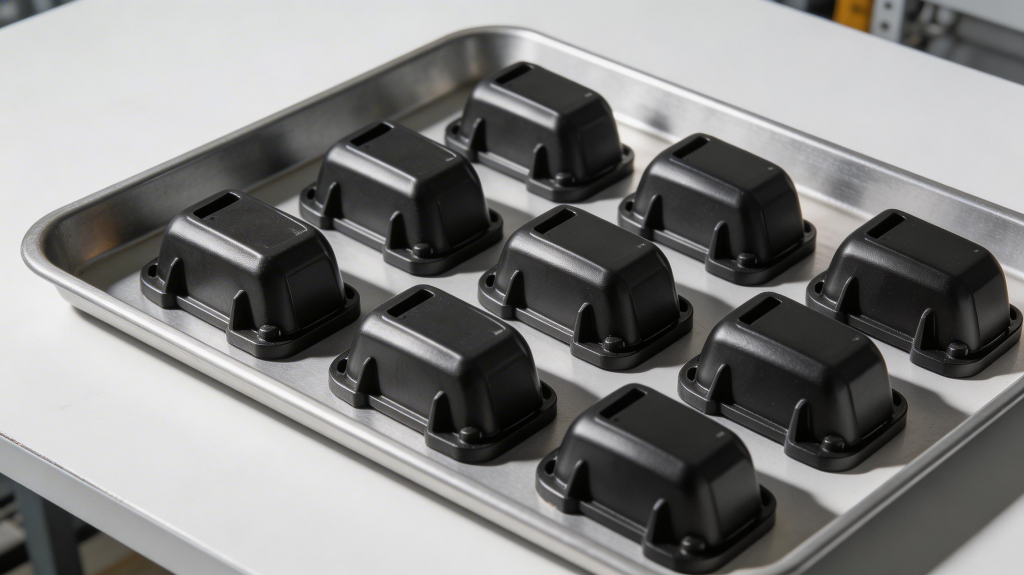
Alternatively, In-Mold Decoration (IMD) and film lamination allow for the bonding of weather-resistant films, such as PVDF or acrylic, directly during or after the molding cycle. These films can provide UV protection while simultaneously adding textures or patterns. Unlike painting, lamination offers a uniform barrier without the risk of solvent entrapment, providing a consistent shield that maintains impact retention rates above 50% even after extended outdoor service.
Livepoint Tooling: Comprehensive ABS Injection Molding and Finishing Solutions
Livepoint Tooling stands as a premier abs plastic injection molding manufacturer, delivering high-precision manufacturing and integrated surface finishing services. From rapid prototyping to mass production, the company ensures every component meets rigorous international standards for quality and durability.
High-Precision Molding and Certification
Livepoint Tooling operates with a commitment to excellence, backed by ISO 9001:2015 and IATF 16949:2016 certifications. The facility utilizes advanced automated injection lines capable of achieving ultra-high precision tolerances down to 0.005 mm. This level of accuracy is vital for complex geometries in automotive and medical applications, ensuring that parts assemble perfectly and perform reliably under stress. By integrating CNC machining and EDM capabilities in-house, Livepoint Tooling accelerates development cycles, helping clients launch products 50% faster than industry averages.
Integrated Surface Finishing Options
Recognizing the versatility of ABS, Livepoint Tooling offers a comprehensive suite of finishing options designed to enhance both function and aesthetics. Services include standard “As Molded” finishes for functional parts, SPI-standard finishes for controlled textures, and high-gloss polishing for cosmetic components. Crucially for outdoor applications, the company provides expert painting services to apply custom colors and protective coatings, as well as silk screening and pad printing for branding. This one-stop approach ensures that all abs injection molded plastic parts leave the factory fully protected and market-ready.
Contact Us
Contact our engineering team today to secure your outdoor product’s longevity with precision manufacturing and expert UV protection strategies.
