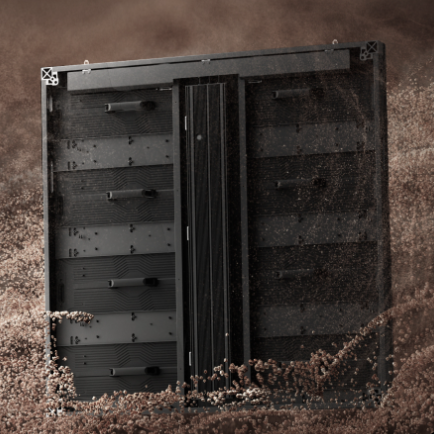
In the high-stakes world of digital out-of-home (DOOH) advertising, an LED screen for advertising outdoor is more than just a marketing tool; it is a significant capital investment. Unlike indoor displays that live in climate-controlLED environments, outdoor screens are the “front-line soldiers” of a brand, constantly exposed to torrential rain, swirling dust, coastal salt air, and baking heat.
The longevity of these assets depends almost entirely on their ability to resist environmental ingress. To navigate this, engineers and facility managers rely on the Ingress Protection (IP) rating system. Understanding these ratings is the first step in ensuring that your video wall solutions don’t just look good on day one but continue to perform flawlessly for a decade.
Decoding the Science of Ingress Protection
An IP rating is an international standard (IEC 60529) that classifies the degree of protection provided by mechanical casings and electrical enclosures against intrusion from solids and liquids. The rating consists of two digits, each representing a specific type of resistance.
- The First Digit (Solids): This scale runs from 0 to 6. A rating of “5” means the screen is protected against harmful dust deposits, while a “6” indicates it is completely “dust-tight”—a vacuum seal against even the finest particulates. For outdoor advertising, where wind can drive grit into the smallest crevices, a “6” is the professional gold standard.
- The Second Digit (Liquids): This scale runs from 0 to 9. For outdoor applications, a “5” protects against water jets, while a “6” protects against high-pressure, powerful water jets from any direction. This is critical for weathering heavy storms or even high-pressure cleaning protocols.
Why IP Ratings Define Your Advertising ROI
In a B2B context, “weathering the storm” isn’t just a metaphor for durability—it’s about preventing downtime. When moisture penetrates an LED cabinet, it causes oxidation of the PCB (Printed Circuit Board) and short-circuits the delicate driver ICs. This leads to “dead pixels” or entire module failures, which can ruin the visual integrity of a high-value ad campaign.
Furthermore, outdoor screens often face the challenge of condensation. As temperatures drop at night and rise during the day, humidity can become trapped inside poorly seaLED cabinets. High-quality video wall solutions are designed not only to keep water out but also to manage internal pressure and humidity, preventing the “fogging” effect that can dim a display’s impact.
Thermal Resilience and Structural Integrity
Beyond the IP rating, the physical material of the cabinet plays a silent but vital role in weather resistance. Many standard outdoor screens use steel or plastic components that can rust or warp under UV exposure. Professional-grade outdoor screens utilize die-cast aluminum or magnalium alloys. These materials are naturally corrosion-resistant and act as superior heat sinks.
By dissipating heat efficiently through the cabinet body, the screen maintains a lower internal temperature. This is essential because for every 10-degree Celsius increase in operating temperature, the lifespan of the LED diodes can be significantly reduced. Therefore, a truly “weatherproof” screen is one that balances ingress protection with high-efficiency thermal management.
Setting the Industry Standard: The EG56 Series
When moving from theory to practical application, the QSTECH EG56 series stands as a definitive example of how technical protection translates into commercial reliability. Designed specifically for the rigors of the global DOOH market, their EG56 line features a robust IP66 protection level. This rating ensures the display is completely dust-tight and can withstand powerful water jets, making it an ideal choice for high-humidity coastal regions or cities prone to heavy seasonal rainfall.
Technically, they have engineered the EG56 to be more than just “seaLED.” The series utilizes a bionic groove design that improves cooling efficiency by 1.4 times compared to traditional flat cabinets. This ensures that even when the screen is producing up to 15,000 nits of brightness under direct sunlight—the peak of industry visibility—the internal components remain at a stable, safe temperature.
Precision is at the heart of their manufacturing. The EG56 cabinets are built with a high-strength, lightweight die-cast aluminum frame, ranging in weight from 19kg to 30kg depending on the size (available in five standardized meter-perfect configurations). This meticulous construction allows for both front and rear maintenance access without compromising the unit’s structural seal, ensuring that technicians can service the screen easily while the interior remains protected from the elements.
Intelligence Meets Durability
Their video wall solutions are not just physically tough; they are intellectually advanced. The EG56 incorporates an independent environmental sensor chip that tracks internal temperature and humidity in real-time. If conditions deviate from the norm, the system provides proactive alerts, allowing operators to intervene before a minor environmental factor becomes a major hardware failure. This “Smart & Energy-Saving” approach reduces operational risk and guarantees that the LED screen for advertising outdoor remains a reliable revenue generator.
About QSTECH
As a globally renowned provider of LED display solutions and a subsidiary of the technology giant CVTE, they bring over 33 years of R&D expertise to the forefront of the industry. With a patent pool of over 9,000 authorized patents and a presence in more than 140 countries, they are dedicated to creating “standardized” display products that simplify the complexity of AV integration. Their unique advantage lies in their vertically integrated supply chain and state-of-the-art testing labs, which ensure every product meets the highest global standards for safety, durability, and visual performance.
Is your outdoor advertising project ready to face the elements? Explore their high-performance LED solutions today and ensure your brand shines through every storm.
