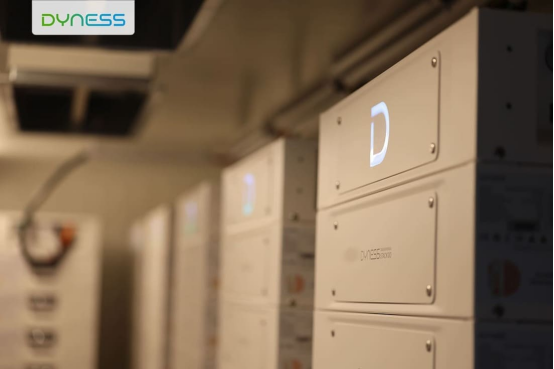
Energy resilience has become a critical requirement across commercial buildings, remote installations, and decentralized power networks. As renewable penetration increases, solar battery backup systems play a central role in stabilizing supply and ensuring continuous operations. Within modern BESS (Battery Energy Storage Systems) architectures, these solutions provide backup power, load management, and energy optimization across diverse application scenarios.
Commercial Building Energy Optimization
In commercial and hospitality environments, solar battery backup systems are widely used to reduce peak demand costs and ensure uninterrupted power supply. A notable example is the Dyness STACK100 deployment in an Austrian brewery, where a BESS with approximately 983 kWh capacity integrates solar generation, storage, and consumption. The system stores excess daytime solar energy and discharges it during peak evening demand, supporting lighting, kitchen operations, and guest services while enhancing overall energy efficiency.
Remote Site Power Reliability
Remote sites such as mining operations, agricultural facilities, and isolated industrial zones rely heavily on solar battery backup systems to replace or supplement unstable grid connections. In these environments, BESS solutions provide consistent power where fuel logistics or grid expansion is impractical. Modular systems like Dyness STACK100 enable scalable deployment, ensuring that energy storage capacity can grow alongside operational demand while maintaining system reliability.
Microgrid Stability and Integration
Microgrids depend on solar battery backup systems to balance distributed energy generation and consumption. Within a BESS, solar power is stored during periods of high generation and dispatched when demand rises or renewable output drops. The Dyness STACK100 system demonstrates this flexibility with its modular architecture, supporting future expansion such as EV charging integration and improved grid interaction for localized energy networks.
Enabling Flexible Energy Infrastructure Development
As energy systems continue transitioning toward decentralization, solar battery backup systems are becoming essential components of modern BESS deployments. Solutions like Dyness STACK100 highlight how integrated storage technologies enhance building efficiency, strengthen remote site reliability, and stabilize microgrid performance, supporting a more resilient and flexible global energy infrastructure.
