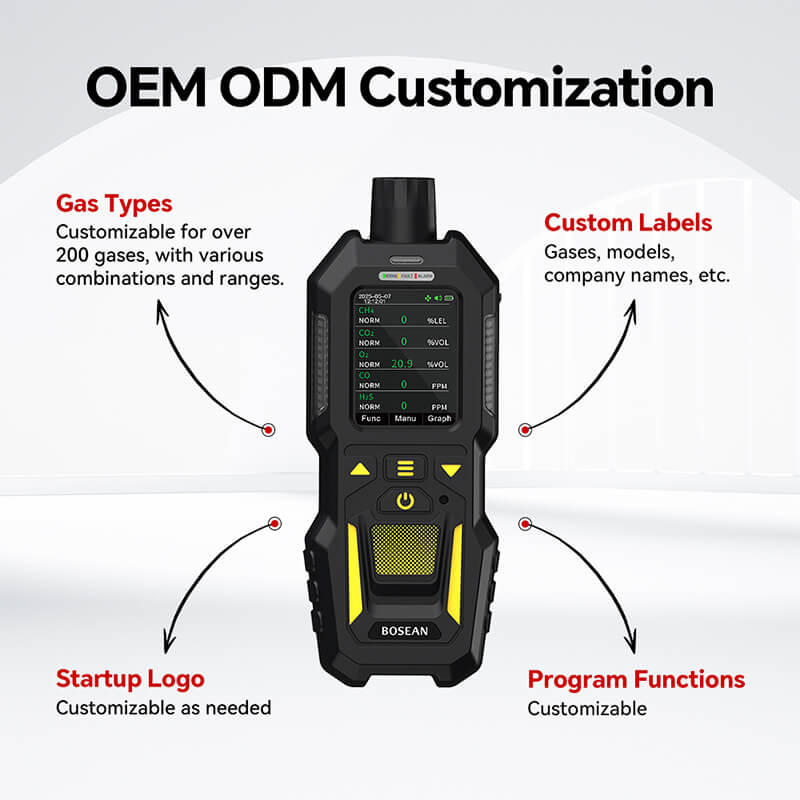
A portable gas monitor is more than a handheld alarm: it samples air, measures target gases, interprets readings and warns users when conditions become unsafe. These functions rely on three connected elements: the sensor block, sampling pump and alarm logic. Understanding how they work helps industrial buyers compare instruments, plan maintenance and select equipment for confined spaces, marine operations and other hazardous environments. It also clarifies what to evaluate when choosing a gas detector manufacturer.
How the Sensor Block Turns Gas into a Reading
The sensor block is the measurement centre of a portable instrument. It contains sensing elements selected for the gases that need monitoring. When a target gas reaches a sensor, a chemical or physical interaction produces a measurable response. The electronics convert that response into a concentration value shown on the display.
Different gases require different sensing technologies. Electrochemical sensors are commonly used for many toxic gases and oxygen measurement, while catalytic or infrared technologies may be selected for combustible gases, depending on the application. Sensor choice affects detection range, response time, selectivity, operating life and cross-sensitivity. Buyers should confirm that the sensor combination matches site hazards rather than relying only on the number of channels.
A multi-gas instrument can monitor several hazards simultaneously. The BTYMQ-BX403 Marine Gas Detector, for example, is designed to detect up to five gases. It supports gas-unit switching and screen rotation, helping users adapt displayed information to different monitoring tasks. The display should make it easy for operators to identify each gas channel and understand its status.
Why the Sampling Pump Matters
A built-in pump draws an air sample through an inlet and directs it toward the sensors. This lets an operator check an area from a position away from the sampling point, which can be valuable before entering a tank, vessel compartment, pit or other potentially hazardous space. The pump does not identify gas; it provides a controlled path for the sample to reach the sensing elements.
Sampling performance depends on more than pump presence. Tubing length and material, flow rate, filters, leaks, moisture and blockages can affect the sample reaching the sensor. Long or unsuitable tubing may delay gas arrival, while a blocked filter can restrict flow. Operators should follow the manual, allow readings to stabilize and check the sampling path regularly.
For marine and industrial users, the BTYMQ-BX403’s pump-based design supports checks where direct access to the sampling point may be difficult. Its high-strength engineering-plastic casing, anti-slip rubber and waterproof, dustproof and explosion-proof design address demanding handling and operating conditions. These features complement, but do not replace, correct sampling procedures and site-specific safety controls.
How Alarm Logic Converts Readings into Warnings
After the sensor signal is processed, the instrument compares the measured concentration with configured thresholds. When a reading reaches a defined limit, alarm logic activates a warning. Depending on the design, alerts may use audible, visual or vibration signals. Different alarm levels can indicate increasing urgency and prompt users to leave an area, investigate the source or follow the site’s emergency procedure.
Reliable alarm behaviour depends on correct configuration. Thresholds must reflect applicable exposure limits, workplace procedures and the gases being monitored. Users should understand whether alarms are based on instantaneous readings, time-weighted values or other supported settings. They should also know how to acknowledge alarms without treating acknowledgement as proof that the atmosphere is safe.
A gas detector manufacturer should provide clear information about sensor compatibility, alarm settings, calibration, bump testing and maintenance. These details help safety managers assess whether an instrument fits existing procedures. Routine functional checks matter because a powered-on device is not necessarily one that will respond correctly to gas.
What Buyers Should Check Before Deployment
Selection should begin with a site hazard assessment. Identify the gases that may be present, expected concentration ranges, required channels and measurement conditions. For marine use, buyers may also need to consider moisture, dust, handling impacts and relevant hazardous-area requirements. Choose a portable gas monitor against documented operating needs, not simply its feature list.
Next, review practical details: display readability, controls, battery arrangements, sampling accessories, alarm types, data functions and service support. Ask how often sensors require calibration, whether replacement parts are available and what training operators need. Supplier support can be as important as initial specifications, especially for organizations managing multiple units or complex sites. The selected gas detector manufacturer should also provide accessible technical guidance.
Bosean develops and sells gas detection and measurement instruments and provides technical services for customers. Its BTYMQ-BX403 combines pumped sampling, multi-gas capability and rugged housing in a marine-oriented detector. Procurement teams should compare documented specifications and service arrangements with their risk assessment. A capable gas detector manufacturer should explain both instrument functions and operating limits.
Conclusion: Treat the Monitor as an Integrated Safety System
The sensor block measures target gases, the pump brings samples to the sensors, and alarm logic turns readings into actionable warnings. Each part affects overall reliability, so buyers should evaluate them together. With suitable configuration, calibration, functional checks and operator training, a portable gas monitor can support safer decisions in marine, industrial and confined-space work. The right choice matches the site’s hazards, procedures and service requirements.
