Safe slide operation depends on routine more than on any single inspection. Guest movement, equipment condition, staff response, water quality, and communication all interact during a busy operating day, so water slide safety is an ongoing management task rather than a one-time design concern. Jinchao as a water park manufacturer approaches aquatic projects with attention to these operational relationships, while a clear daily routine helps operators identify problems before they become interruptions.
Turning Safety Into an Operating Routine
Daily inspections provide the foundation for water attraction safety, particularly in facilities where equipment is exposed to constant water, sunlight, cleaning agents, and repeated rider use. Staff can check slide surfaces, joints, access stairs, handrails, pool edges, drainage points, and visible hardware before opening. Findings should be documented so that unusual wear can be compared across operating periods instead of relying only on memory.
A useful inspection process also distinguishes between routine observations and conditions that require technical attention. Small surface changes, unusual sounds, loose fittings, drainage irregularities, or altered water flow may appear insignificant individually, yet patterns can reveal developing maintenance needs. Such records make aquatic safety design more practical because operating teams gain information that can inform later adjustments.
Emergency readiness deserves the same level of routine attention. Staff need clear communication channels, accessible emergency controls, defined responsibilities, and procedures suited to the actual layout. Regular drills can reveal whether employees know who responds first, where guests should be directed, and how affected areas can be isolated without creating additional confusion.
Managing Equipment and Guest Movement
The physical arrangement of an attraction affects how safely people enter, ride, exit, and move toward the next activity. Effective water slide safety standards address more than the slide surface itself; height access, rider positioning, dispatch procedures, landing zones, pool depth, barriers, and surrounding circulation all form part of the operational picture. These details become particularly important during peak periods, when small delays can quickly affect nearby areas.
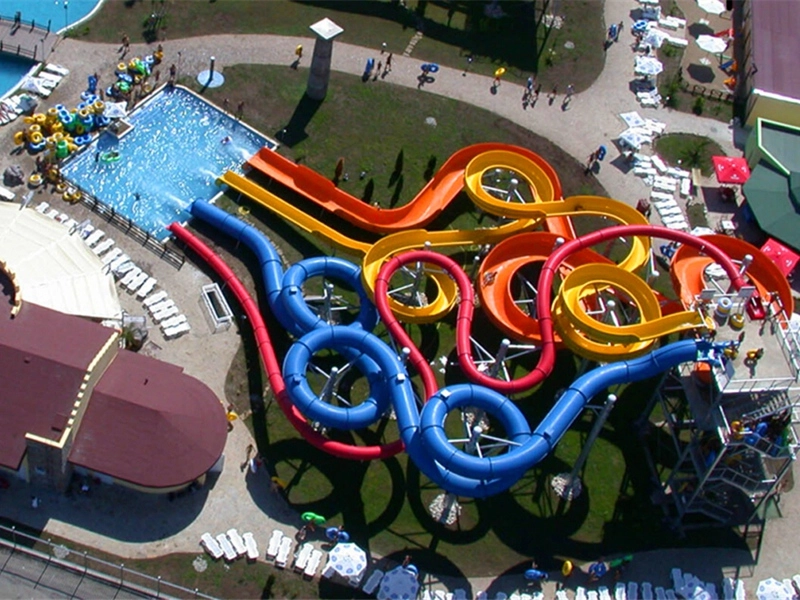
The Loop water slide combination, also known as the Fusion Slide, demonstrates how varied flume configurations can influence operational planning. Its starting height ranges from 5–15 meters, with 0.8- or 1.4-meter flume widths, capacity for 1–2 riders per lane, and an approximate hourly capacity of 300–400 people. Its combination of open and enclosed flumes allows different ride experiences within one attraction, but dispatch spacing and rider preparation still need to match the specific configuration.
Clear instructions can reduce uncertainty before riders enter an attraction. Signs should communicate rider requirements, posture rules, restrictions, and exit directions in language that visitors can understand quickly. Staff positioning matters as well: employees should be able to observe critical transition points without obstructing guest circulation. These details support safe water play equipment by connecting equipment requirements with real-world visitor behavior.
Using Water Systems as Safety Controls
Water management has a direct operational relationship with aquatic safety. Pumps, filtration, circulation, chemical treatment, and drainage all influence the environment in which guests interact with attractions. Changes in water clarity, flow, temperature, or chemistry can affect both comfort and facility management, making routine monitoring an important part of commercial water slide safety.
Different attractions may place different demands on circulation systems. A high-throughput Water Slide can require substantial water movement, while interactive play areas may distribute flow across numerous spray points. Operators should understand normal operating ranges for each area and investigate unusual changes rather than treating every fluctuation as routine. Maintenance records can then connect water-system performance with attraction usage.
Facility teams should also consider access for maintenance work during the original planning stage. Pumps, valves, filters, electrical controls, and drainage components need practical service routes so that inspections do not require unnecessary disruption to guests. Such decisions form part of aquatic safety design, because maintainability affects how consistently critical systems can be checked and serviced.
Making Standards Work in Real Facilities
Standards provide a framework, but implementation depends on how a specific attraction is designed and operated. water attraction safety can involve manufacturer documentation, local regulations, engineering requirements, operating procedures, staff training, and inspection records. These sources may address different parts of a project, so operators need a clear method for translating them into everyday procedures.
A facility should also account for changes over time. Renovations, replacement components, altered queue layouts, new operating schedules, or modified attraction settings can introduce conditions that were not present during initial commissioning. Reviewing procedures after significant changes keeps water slide safety standards connected with the facility as it actually exists rather than the way it appeared on opening day.
Staff knowledge is another operational asset. Training can cover rider screening, dispatch communication, emergency stops, evacuation routes, water-quality observations, cleaning procedures, and reporting methods. Refresher sessions are particularly useful after seasonal reopening or changes in personnel. Consistent training supports safe water play equipment because the physical condition of an attraction is only one part of its operating environment.
Conclusion
Slide safety comes from the connection between equipment, people, water systems, and procedures rather than from any single checklist. A well-defined daily routine for each Water Slide, covering inspections, rider communication, dispatch control, and maintenance responsibilities, makes safety part of normal decision-making instead of an isolated compliance task.
Jinchao’s project experience can contribute technical considerations during planning, yet the long-term performance of a venue also depends on how carefully operators translate design requirements into everyday practice. That combination gives commercial water slide safety a practical role in maintaining reliable aquatic experiences throughout the operating season.
