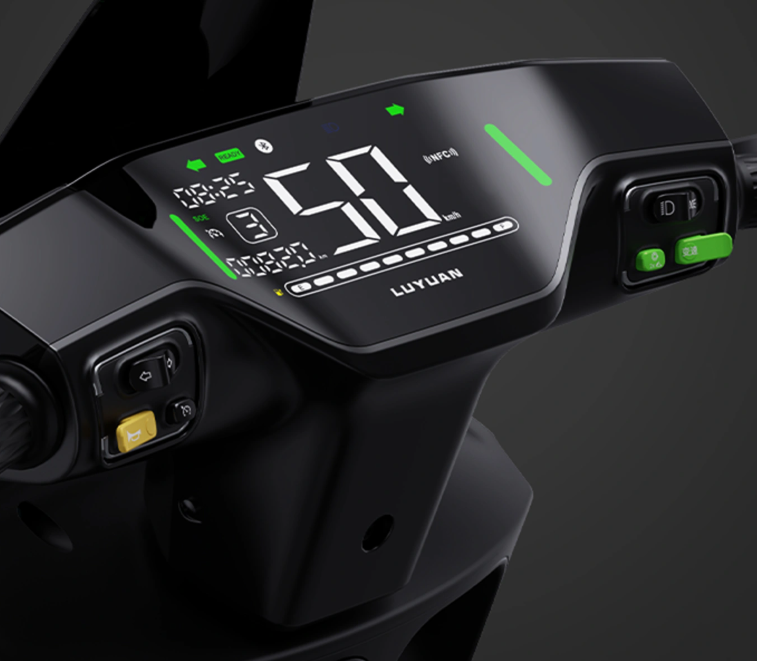
Battery specifications can shape a scooter’s real-world usability, after-sales costs, and customer satisfaction long after an order leaves the factory. Yet a capacity figure or advertised range rarely tells the whole story. Distributors need to understand how a battery performs under different temperatures, how its condition is monitored, and what evidence supports the supplier’s claims.
A capable electric scooter manufacturer should be able to provide clear technical documentation, explain the limits of published figures, and help business partners assess whether a battery configuration suits their market. LUYUAN operates in the electric two-wheeler sector, where reliable battery information is an important part of evaluating products for commercial distribution.
Battery Specifications Beyond Voltage and Capacity
Voltage and ampere-hour capacity are useful starting points, but neither should be interpreted in isolation. Multiplying voltage by ampere-hours provides a nominal estimate of energy capacity in watt-hours, which can help compare batteries with different electrical ratings. Even so, usable energy depends on battery chemistry, operating conditions, discharge limits, and system design. Distributors should request the nominal voltage, rated capacity, watt-hour rating, cell chemistry, and battery configuration for the exact model being quoted.
Range claims require equally careful review. Published distance figures may come from controlled tests with particular speeds, loads, temperatures, and road conditions. Real-world performance can vary with rider weight, frequent acceleration, gradients, tire pressure, wind, and ambient temperature. Suppliers should disclose the test method behind a stated range and explain whether the result applies to the exact configuration offered. A realistic understanding of range helps retailers set customer expectations and reduces the likelihood of complaints after purchase.
Battery documentation should also identify the intended operating and storage conditions. Temperature limits for charging, discharging, and long-term storage can differ, and using a battery outside its specified range may affect performance, safety, or service life. Distributors should ask for the relevant technical datasheet and user guidance, along with any applicable transport and market-compliance documents. This information supports inventory planning, staff training, and responsible communication with retailers and end users.
Understanding Battery Management and Charging Data
A battery management system (BMS) monitors battery conditions and helps control operation within defined limits. Depending on its design, it may track cell voltage, current, temperature, state of charge, and fault conditions while supporting protective responses to abnormal operation. When comparing an electric scooter battery management system, distributors should ask which parameters are monitored, what protection functions are available, and whether diagnostic information can be accessed during service. The term BMS alone does not indicate the depth of monitoring or the quality of implementation.
Charging behavior deserves a separate set of questions. Battery chemistry and temperature influence the appropriate charging profile, while charger output affects how long replenishment takes. A smart charging system may adjust charging behavior according to temperature, but the supplier should explain the control method, operating limits, and fault response. Dealers should request recommended charger specifications, normal charging-time estimates, and instructions for handling unusual heat, charging interruptions, or battery warnings.
Digital monitoring can provide additional visibility into battery condition. Some systems display charge level and alerts through a mobile application, while more advanced arrangements may offer temperature information, fault notifications, or other battery-related data. However, app features vary by model and software configuration, and a displayed state-of-charge estimate is not the same as a laboratory measurement of remaining capacity. An electric scooter manufacturer should clarify which functions are available in the quoted version, whether an internet connection is required, and how software or application support is maintained over time.
Verifying Cycle Life, Safety, and After-Sales Support
Cycle life is often presented as a single number, but its meaning depends on the test conditions and the threshold used to define the end of useful service. A battery rated for 700 charge cycles, for example, should be evaluated against the stated depth of discharge, temperature, charging method, and remaining-capacity criterion. Distributors should request the supporting test report or technical basis rather than assuming that every battery will reach the same number of cycles under everyday use. Partial charging and different operating patterns can also affect how cycle counts are interpreted.
Safety documentation is another essential part of supplier evaluation. Relevant records may include battery test reports, transport documentation such as UN 38.3 where applicable, and certifications or conformity documents required in the destination market. The exact requirements depend on the battery, product category, shipping method, and jurisdiction. A distributor should verify that the documents match the actual battery configuration rather than relying on certificates for a similar product or a different component.
Warranty and service arrangements determine how battery issues are handled after delivery. The commercial agreement should specify the warranty period, covered components, exclusions, claim evidence, replacement procedures, and responsibility for shipping or labor costs. It is also useful to confirm the availability of replacement batteries, chargers, and diagnostic support. A well-documented electric scooter battery management system can help identify certain faults, but clear service procedures remain necessary to turn technical information into effective after-sales support.
Conclusion
A well-informed battery purchase depends on evidence, not a single capacity figure or a bold range claim. Specifications, charging limits, monitoring functions, cycle-life test conditions, safety records, and warranty terms each reveal a different part of the ownership experience. Distributors comparing an electric scooter manufacturer should use these details to assess both product suitability and the support available after delivery.
LUYUAN offers battery-related technologies that can be reviewed through this same process, with manufacturer claims verified against the relevant model documents and test evidence. A disciplined approach gives dealers a more dependable basis for comparing suppliers, preparing accurate product information, and managing long-term customer expectations.
