Heat cycling and vibration can shorten an aftertreatment assembly’s service life under real duty even after it passes an initial emissions test. The converter core, shell, filter substrate, and joints see different stresses as the engine starts, reaches load, and cools. Durability design therefore begins with the mechanical and thermal events expected in service, then asks which materials and structures can endure them.
The metallic catalytic converter and the dpf particulate filter face related but distinct challenges. The converter must preserve a stable flow path and coating support under temperature changes and movement.
The filter must continue forcing exhaust through intact porous walls while soot loading and regeneration alter its thermal state. Neither component’s nominal conversion or capture performance describes that full lifetime exposure.
Choose the Filter for Its Thermal and Mechanical Duty
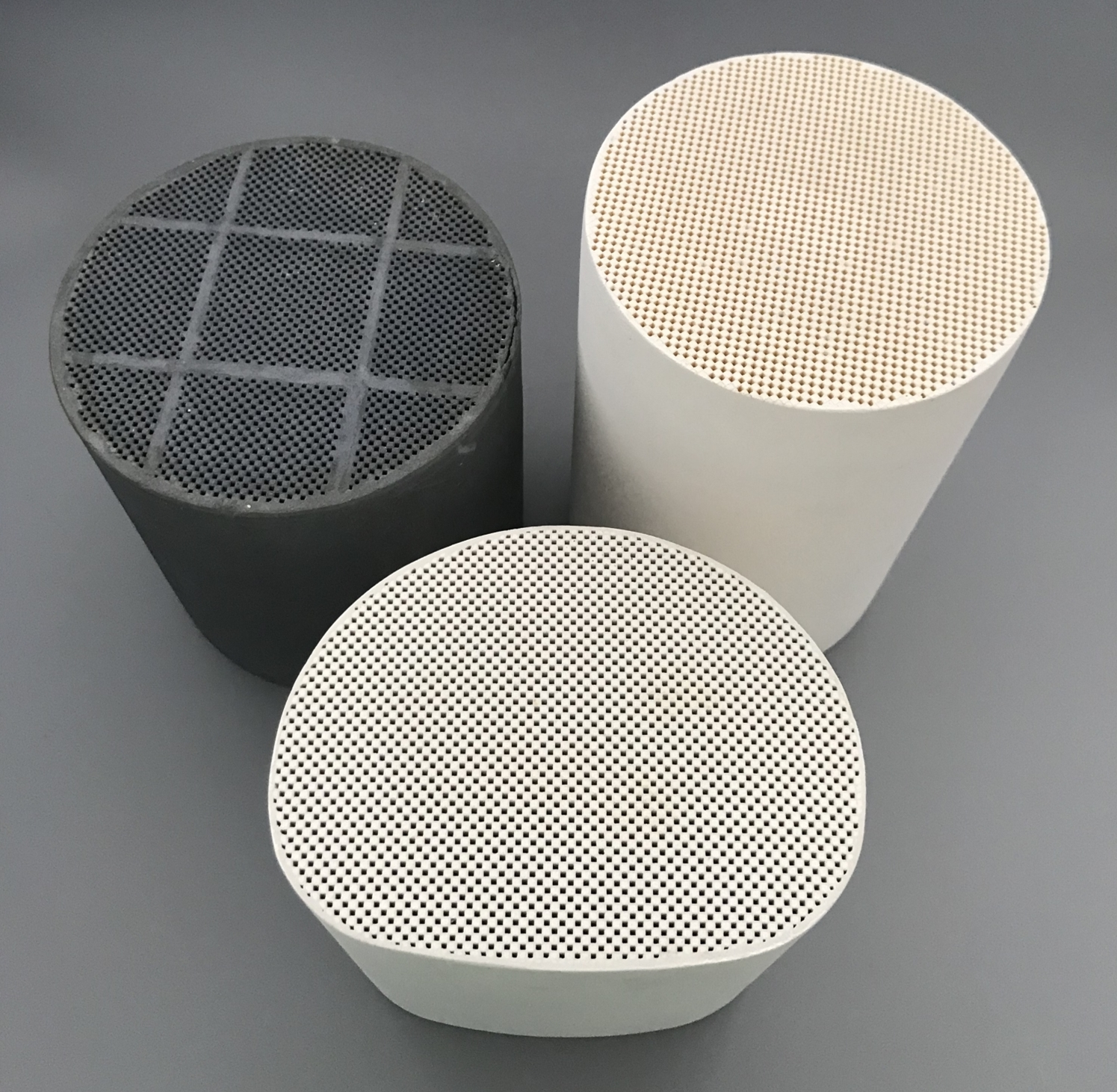
Cordierite and SiC are both used in wall-flow DPF products, but their material properties make them suited to different service demands. Cordierite is relatively lightweight and cost-effective.
SiC offers higher thermal conductivity and mechanical strength, which can be useful under harsher heavy-duty conditions. The choice still depends on exhaust temperature, soot loading, regeneration severity, space, and the required filter size.
Regeneration introduces a further thermal stress case. Burning accumulated soot changes local temperature and can create gradients across the filter body. A regeneration event couples filter material and dimensions with control strategy; their combined effect determines whether component limits are exceeded in service. Heat and mechanical loads also reach the converter and housing that connect it to the filter.
Filter damage is not always visible from outside the canister. A change in measured capture or an unexpected pressure pattern can signal an internal problem that calls for inspection. The filter should be tested after representative regeneration and vibration exposure, with the result compared against its initial state. That sequence links endurance to continuing filtration, rather than to survival of the housing alone.
Trace Loads through the Metal Converter
Engine vibration and exhaust-system movement can strain a converter’s shell, core, and mounting points. Repeated start-stop cycles add thermal expansion and contraction.
A metal honeycomb can offer mechanical strength and fast heat transfer, yet its installed durability still depends on geometry, housing, welds, and the severity of the duty cycle. A material advantage should be examined as part of the assembled component.
A metallic catalytic converter also has to remain compatible with adjacent devices. If a rapid temperature rise reaches a downstream component, the assembly must tolerate the resulting gradient. An open flow path that lowers one source of restriction cannot compensate for a cracked filter or a leaking joint. The design review should include interfaces rather than ending at the converter outlet.
An OEM durability plan can separate vibration caused by the engine from movement imposed by mounting and road or machine loads. Each path may stress a different joint or support. Post-test inspection should therefore examine the core retention, housing, and connection points, not merely repeat an emissions measurement. A device can lose mechanical margin before a short functional test detects a change.
Verify the Assembly, Not Just the Materials
Mechanical strength, thermal-shock resistance, and vibration tolerance define Hualian Catalyst‘s stated priorities for metallic converter durability. The company also describes rapid heat transfer and low exhaust resistance.
Those properties are relevant where frequent starts and varying loads place simultaneous demands on light-off, flow, and structural integrity. They do not remove the need for mounting and thermal-cycle checks on the exact OEM configuration.
Material descriptions establish a starting point for selection; test conditions establish whether the proposed assembly can survive. Vibration exposure, thermal cycling, pressure drop, filtration performance, and post-test inspection each answer a different question. A component may retain its shape yet lose function, or maintain initial function while developing damage that shortens service life.
Cracks create a route around the porous walls that normally retain soot in Hualian’s DPF line. Gas passes through those walls during wall-flow filtration, making their integrity essential after repeated thermal exposure.
A dpf particulate filter with a bypass path needs inspection and renewed capture measurements. Its original capture rating describes the undamaged structure before the representative exposure sequence, not the altered path through the canister.
The intended engine duty determines which tests deserve priority. A machine with long steady runs has a different temperature pattern from a vehicle with repeated cold starts. Likewise, mounting locations impose different vibration and shock loads.
Reports should identify the tested converter and DPF configurations, including substrate material, geometry, and relevant assembly details, so a result can be traced to the proposed design. A failed prototype still provides evidence. Crack location or wear near a mount can identify the responsible load and focus the next validation cycle.
Durability is achieved when the structure that supports conversion and the structure that captures soot remain functional together. The metallic catalytic converter offers thermal and mechanical advantages, while the dpf particulate filter material must suit its own temperature and regeneration duty. Long-term confidence rests on the assembled system surviving the operating pattern it will actually encounter.
