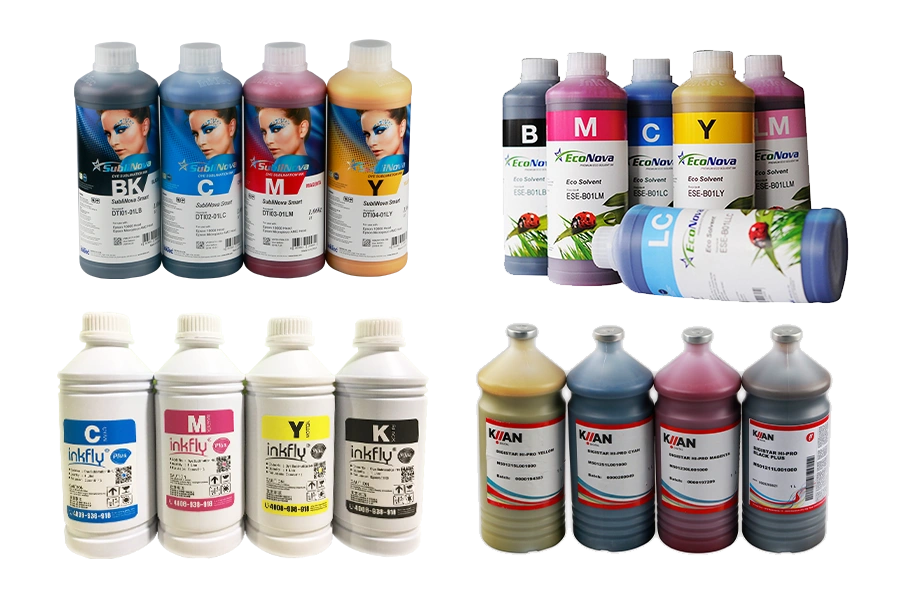
Sourcing commercial printing consumables requires industrial textile manufacturers to carefully evaluate fluid chemical stability, color density, and printhead compatibility. In high-volume production, selecting high-grade sublimation ink directly influences print longevity, vibrant color reproduction, and machine operational uptime across extensive order batches.
Chemical Composition and Fluid Stability
Disperse dyes dispersed within water-based carriers form the foundation of high-performance textile colorants. Precise particle grinding prevents pigment agglomeration, allowing microscopic color molecules to pass through ultra-fine piezo nozzles without causing physical blockages.
Viscosity and surface tension must remain within strict operating tolerances across varying ambient room temperatures. Stable chemical formulations reduce micro-jet deflection, keeping drop trajectories straight during continuous printing cycles.
Color Gamut and Saturation Characteristics
Formulating vibrant dyes enables textile printers to produce intense blacks, deep primary tones, and subtle secondary shade transitions. Incorporating specialty CMYK+W configurations expands graphic possibilities on both traditional light textiles and specialized coated materials.
Transferring high-density dye formulations onto transfer paper requires balanced drying speed to prevent ink bleeding. Controlled liquid absorption allows paper coatings to release gasified color molecules efficiently during heat press activation.
Printhead Compatibility and Hardware Protection
Industrial dye formulations must interact safely with piezoelectric nozzle plates across multiple manufacturer platforms. Compatibility extends across major industry hardware brands, including Epson, Mimaki, Roland, and Mutoh systems.
Chemical purity prevents corrosive damage to internal damper membranes and delicate manifold channels. Formulations provided by Xinflying protect internal liquid circuits, reducing wear on costly printhead assemblies over extended operating shifts.
Heat Activation and Fiber Penetration Dynamics
Exposing printed paper to temperatures near 200°C turns solid disperse dye particles into vapor without liquid melting. Gaseous dye molecules penetrate open polyester fibers before locking permanently into the polymer structure upon cooling.
Deep chemical penetration prevents color washing out, fading, or peeling when finished textiles undergo repeated laundering cycles. Proper fiber bonding keeps sportswear and soft signage flexible while retaining original graphic sharpness.
Bulk Packaging Options and Inventory Logistics
High-capacity printing operations rely on flexible volume packaging to lower material handling labor and bottle waste. Sourcing Dye Sublimation Ink for Textile in quantities ranging from 1L bottles up to 20L drums allows production managers to optimize ink replenishment routines.
Large fluid containers integrate smoothly with continuous bulk feed systems, maintaining steady head pressure in main sub-tanks. Securing a reliable sublimation ink wholesale channel helps commercial facilities maintain consistent supply buffers against supply chain delays.
Environmental Standards and Non-Toxic Formulations
Modern textile processing standards emphasize eco-friendly water-based dye formulations that omit hazardous organic solvents. Eliminating toxic compounds safeguards factory floor air quality and complies with international safety standards for wearable textiles.
Low-emission dye solutions reduce wastewater treatment burdens during factory operations, aligning facilities with global eco-friendly manufacturing expectations. Clean chemical profiles also lower worker exposure to harsh chemical vapors.
Batch-to-Batch Color Consistency Controls
Sustaining strict factory quality control prevents subtle color shifts between different ink manufacturing runs. Commercial print shops purchasing sublimation ink need guaranteed color uniformity to prevent costly recalibration of raster image processor (RIP) profiles. Eliminating the need for repeated RIP adjustments between ink batches saves hours of prepress labor per job, accelerating time-to-print and reducing the risk of operator-introduced profiling errors.
Rigorous spectrophotometer testing during fluid manufacturing verifies that chromatic values remain identical across production lots. Reliable batching prevents customer complaints regarding color variations in multi-part apparel contracts. Providing spectrophotometric certification data with each ink delivery builds trust and transparency, giving production managers auditable documentation that supports internal quality audits and external customer compliance requirements.
Economic Efficiency and Consumable Cost Optimization
Consumable expenses account for a significant portion of long-term operational costs in digital textile facilities. Partnering with Xinflying enables print shop managers to manage fluid expenditures while securing reliable formulation standards.
Balancing price per liter against pigment concentration reduces total ink volume required per square meter of printed fabric. Higher dye concentrations allow lighter fluid deposits to deliver deep saturation without oversaturating paper substrates.
Workflow Optimization and System Reliability
Integrating stabilized disperse dye fluids minimizes unexpected downtime caused by nozzle drying during short operational pauses. Reliable fluid flow allows automated printers to execute overnight roll-to-roll jobs with reduced operator supervision. Consistent fluid behavior eliminates the variability that often forces operators to babysit long runs, enabling production planners to schedule back-to-back jobs with confidence in on-time completion.
Streamlining consumable procurement via a dependable sublimation ink wholesale partnership supports smooth production schedules. Consistent ink performance reduces paper scrap caused by misfires or banding defects during rapid production passes. Batch-to-batch ink consistency from a trusted wholesale partner ensures that color reproduction remains stable across reorders, eliminating the need for frequent profile recalibration and reducing setup waste.
Conclusion
Evaluating dye purity, hardware compatibility, and supply logistics enables commercial print operations to maintain reliable textile output. Securing high-performance consumable fluids supported by Xinflying provides textile manufacturers with a solid foundation for sustainable growth and consistent print quality.
