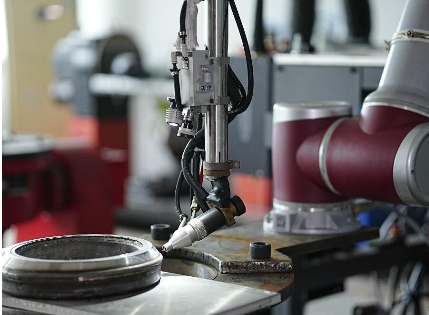
Welding automation has long been associated with caged industrial arms and exclusion zones. However, the emergence of the cobot welding system is changing that paradigm—bringing arc welding closer to human operators without compromising safety. Across automotive and heavy equipment shops, safety managers are reevaluating their risk assessments. Three essential safety features now define a modern industrial welding robot that can operate alongside skilled welders. These features go beyond simple collision detection, addressing arc radiation, unexpected motion, and communication failures.
Arc Protection and Light Shielding for Operator Safety
Arc flash is a primary hazard in any welding environment. A properly designed cobot welding system integrates arc protection at the software and hardware levels. Unlike traditional industrial welding robot cells that rely on fixed light curtains, modern cobots support debugging mode—allowing empty program runs without arcing. This enables operators to verify programmed waypoints while the arc is inactive. When welding begins, safety interlocks between the robot and welding machine ensure that alarm signals from either side trigger an immediate stop. For the JAKA Zu30, manual arc start/stop control further allows operators to manage gas feed and wire stepping without exposing themselves to active arcs during setup.
Force-Controlled Drag Teaching Eliminates Pinch Points
Conventional welding robots require operators to enter the cell for reprogramming, creating pinch and crush risks. A safer approach uses force control lead-through programming. The industrial welding robot equipped with force sensors allows a technician to physically guide the arm through a welding path while the robot records the trajectory. This feature supports payloads from 3 to 18 kg with smooth, low-resistance motion. By eliminating the need for a teach pendant during path definition, the cobot welding system keeps operators in a collaborative mode rather than a dangerous “inside the cage” posture. Handy point teaching reduces setup time while inherently limiting contact forces.
Safety Interlock and Communication Redundancy
A silent failure in communication between the robot and welding machine can lead to unexpected arc strikes or motion. Essential safety architecture includes bidirectional safety interlock: alarm signals from the robot trigger welding machine shutdown, and welding faults stop robot motion. The JAKA Zu30’s easy configuration interface facilitates this communication setup transparently. For facilities running mixed production, this redundancy ensures that a cobot welding system remains predictable—even when switching between manual control and automated sequences. Load-and-go arc welding packages via the app further reduce configuration errors that could bypass safety checks.
Trust but Verify: The New Standard in Welding Safety
Safety in welding automation is no longer just about barriers—it is about intelligent collaboration. From a third-party perspective, JAKA has embedded these three core safety functionalities into the Zu30: arc protection via validation mode, force-controlled drag teaching, and robust safety interlocks. As a heavy-load industrial welding robot reaching 1350 mm with a 30 kg payload, the Zu30 demonstrates that high-power welding and close human collaboration are not mutually exclusive when safety is designed from the ground up.
