A residential energy storage system can be perfectly matched to a home’s electricity use at the time of installation and still become inadequate later. The reason is not necessarily higher household consumption across the board. New electrical loads such as an EV charger or heat pump can change when electricity is used, how much power is required at once, and how much solar energy needs to be shifted into the evening.
Residential energy storage systems can be planned for future electricity demand by considering current consumption, expected new loads, peak power requirements, and the possibility of supported battery expansion.
The Battery Should Not Be Sized for Today Alone
Current electricity consumption provides an essential starting point, but it should not be the only input to residential storage planning. A household considering an EV or heat pump has a different future load profile from one that expects no major changes to its electrical demand.
The timing of those loads matters as much as their total energy consumption. EV charging may create a concentrated demand period after the vehicle returns home. A heat pump can introduce recurring electrical demand associated with heating or cooling. Either addition can reduce the amount of solar energy available for other household uses or increase reliance on stored electricity.
Consequently, the initial system should account for credible future scenarios rather than simply matching today’s monthly electricity bill.
Future Demand Changes More Than Daily Energy Use
A useful planning distinction is between energy capacity and power capability. Battery capacity determines how much electricity can be stored, while system power determines how quickly electricity can be delivered or absorbed.
That difference becomes important as new loads are introduced. A household may have enough stored energy to cover evening consumption but still encounter a system limitation if several substantial loads operate simultaneously.
Solar generation creates another variable. A larger battery can store more midday PV production, but the charging and discharging path still depends on the system architecture. Future demand planning therefore needs to consider both the amount of energy required over time and the power needed during high-demand periods.
This is why simply installing an oversized storage battery is not always the most effective form of future-proofing. The battery, inverter and load-management strategy need to be considered as one system.
Capacity Expansion Starts With the Battery Architecture
For many households, future-proofing is better achieved through planned expansion than by purchasing maximum capacity immediately. The initial installation can meet present requirements while leaving a technically supported route to increase storage later.
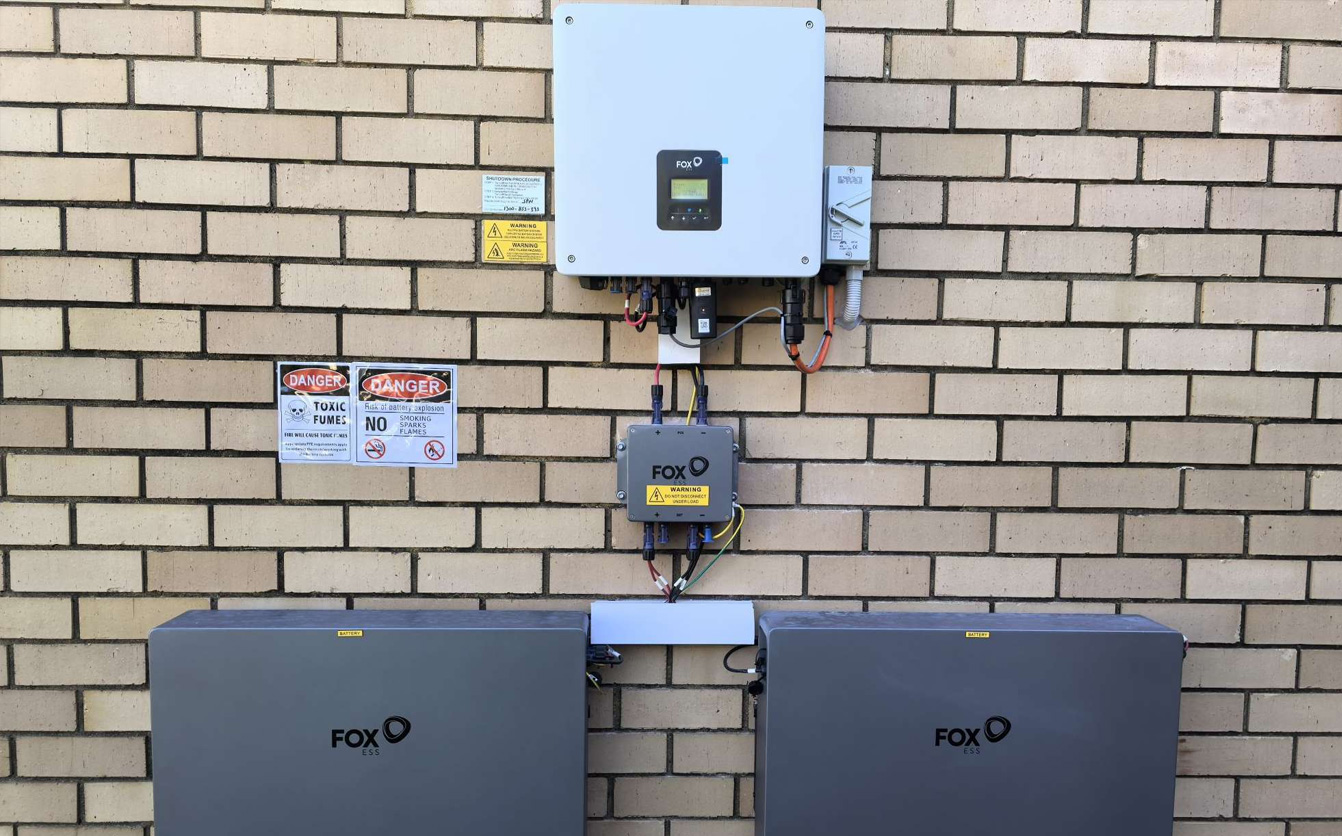
The battery range published by Fox ESS illustrates this approach. Its high-voltage portfolio includes systems identified as expandable, with different energy ranges. For example, the EP6 has a published energy range of 5.76–23.04 kWh, while the EP11 ranges from 10.36–41.60 kWh, illustrating that expandable systems can cover different storage capacity requirements.
Those figures are not a recommendation for a particular household. Their significance lies in the architecture: storage can be planned as a system that grows rather than treated as a fixed quantity selected once.
Space, electrical infrastructure and equipment compatibility should consequently be considered during the first installation. A future expansion is only useful if the original design leaves a practical route for implementing it.
Power Headroom Matters When New Loads Arrive
Capacity expansion addresses one side of future demand. Power planning addresses another. An EV charger can introduce a substantial instantaneous electrical requirement, while a heat pump may operate for extended periods. If these loads overlap with normal household consumption, the relevant question becomes whether the inverter and wider energy system can manage the combined demand.
Hybrid inverters therefore deserve attention during the initial design rather than being treated simply as equipment that connects PV and batteries. The available hybrid-inverter range from Fox ESS forms part of an ecosystem intended to integrate generation and storage within residential energy systems.
Installers should map realistic future operating scenarios before finalizing the system. For example, the planning exercise can consider what happens when an EV is charging while the heat pump and normal household loads are operating. That scenario may reveal a power constraint that a larger battery alone cannot solve.
EV Charging and Heat Pumps Change the Planning Equation
Future electrification also creates an opportunity to manage demand instead of simply adding more storage. EV charging is particularly relevant because charging can often be scheduled around household energy conditions rather than treated as an entirely inflexible load.
A residential energy strategy can therefore consider the relationship between solar generation, battery state of charge and vehicle charging. The EV charger becomes part of the energy-management architecture instead of an isolated electrical appliance.
Heat pumps introduce a different pattern. Their electricity demand can extend across longer operating periods, making coordination with solar production and stored energy particularly relevant. Fox ESS also includes EV chargers and heat pumps within its residential product portfolio, reflecting a broader system approach in which storage sits alongside other electrified household loads.
The objective is not to predict the household’s exact electricity consumption years in advance. It is to identify the loads most likely to change the system and design around their electrical characteristics.
What a Future-Ready Residential System Looks Like
A future-ready residential system is not necessarily the one with the largest battery installed on day one. It is the one whose architecture leaves credible options when electricity demand changes.
Fox ESS’s expandable battery portfolio provides one example of this principle, with models such as the EP6, EP11 and larger systems offering different energy ranges and an expandable-system design. The appropriate configuration still depends on the home’s actual load profile, PV system, inverter arrangement and anticipated future equipment.
For homeowners and installers, the planning priority is therefore straightforward: identify likely future loads early, distinguish capacity from power, and reserve a practical path for expansion. An energy storage battery can then be selected as part of a longer-term system architecture rather than as a standalone purchase.
