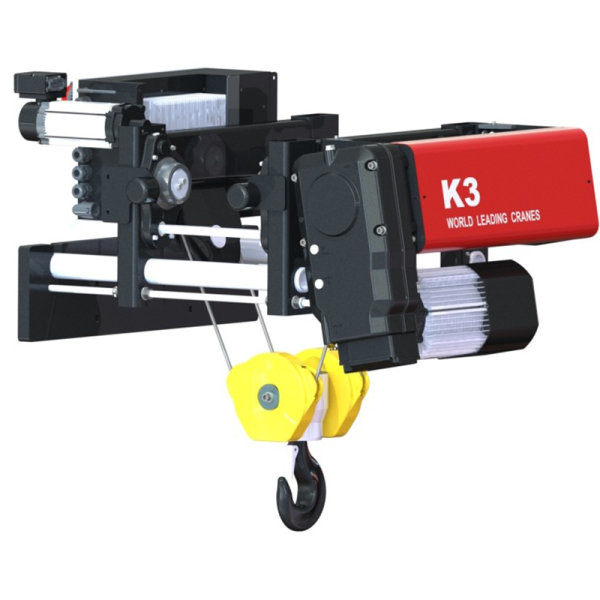
Selecting a wire rope hoist involves more than choosing a suitable lifting capacity. Industrial lifting equipment must match the operating environment, lifting frequency, load characteristics, and expected service life of the application. A hoist suitable for occasional lifting may not provide the same performance when used continuously in a production facility.
For this reason, duty classification is an important consideration when specifying a wire rope hoist. Understanding crane duty cycle classification, hoist duty cycle requirements, and crane duty class can help equipment users select a lifting solution that is properly matched to actual working conditions. WORLDHOISTS provides a range of hoisting and lifting equipment designed for different industrial applications and operational requirements.
Understanding Wire Rope Hoists
A wire rope hoist uses a wire rope wound around a drum to raise and lower loads. Compared with simpler lifting mechanisms, this configuration can support substantial lifting capacities while providing controlled vertical movement over different lifting heights.
Wire rope hoists are commonly integrated with overhead cranes and other material handling systems. Their configuration can vary according to lifting capacity, lifting speed, rope arrangement, motor characteristics, control method, and installation requirements.
The correct specification depends on how the equipment will actually be used. A hoist handling heavy components several times per hour has different requirements from one used only occasionally for maintenance work. Looking only at maximum lifting capacity can therefore result in an unsuitable selection.
Why Hoist Duty Cycle Matters
The hoist duty cycle describes how frequently and intensively a hoist is expected to operate. Factors such as average load, lifting distance, operating frequency, and working hours all contribute to the overall workload placed on the equipment.
For example, a hoist used in a manufacturing environment may perform repeated lifting and lowering operations throughout a working shift. Another installation may operate only a few times each week. Although both systems could require the same rated lifting capacity, their service requirements are substantially different.
Selecting equipment according to the actual hoist duty cycle helps ensure that motors, brakes, drums, wire ropes, and other components are appropriate for the expected workload. It also provides a more practical basis for evaluating equipment service requirements and long term operating costs.
How Crane Duty Class Affects Equipment Selection
Crane duty class provides a way to describe the expected operating intensity of a crane system. It considers factors such as the frequency of use and the proportion of loads handled relative to the rated capacity.
A higher crane duty class generally indicates more demanding operating conditions. Applications involving repetitive production lifting may therefore require equipment with a different specification from cranes used for occasional workshop handling.
When selecting a wire rope hoist, the hoist should be evaluated as part of the complete lifting system. The crane structure, trolley, runway, controls, brakes, and lifting mechanism all need to be compatible with the intended operating conditions.
This is particularly important when replacing an existing hoist. The new unit should not simply match the original lifting capacity. Its duty requirements, lifting height, operating speed, available power supply, installation dimensions, and control configuration should also be reviewed.
Understanding the Overhead Crane Classification Standard
An overhead crane classification standard provides a framework for evaluating equipment according to its expected working conditions. Different standards and classification systems may use different terminology or calculation methods, so users should identify the standard applicable to their project before specifying equipment.
Classification is useful because rated capacity alone does not describe the complete workload of a crane. Two cranes with identical capacity ratings can experience very different levels of mechanical and electrical stress depending on how often they operate and how much of their rated capacity they typically handle.
For equipment selection, classification should therefore be considered alongside lifting capacity, lifting height, speed, environmental conditions, and installation requirements. This approach can help avoid both under specification and unnecessary overspecification.
Key Factors to Consider When Choosing a Wire Rope Hoist
Lifting capacity is an essential starting point, but it should be based on the actual loads that the equipment will handle. The maximum expected load, typical working load, and potential load variations should all be considered.
Lifting height is another important factor. The required rope length and drum configuration depend on the distance between the lowest and highest lifting positions. Available headroom may also influence the appropriate hoist arrangement.
Operating frequency should be evaluated carefully. Users should consider the number of lifting cycles per hour, average operating hours per day, and expected working days throughout the year. These details provide a clearer picture of the required duty classification.
The operating environment also matters. Dust, moisture, temperature variations, outdoor exposure, and other site conditions can affect equipment selection and maintenance requirements. Electrical specifications, control systems, travel speeds, and installation dimensions should also be confirmed before finalizing the equipment.
Working With the Right Equipment Specification
A reliable lifting system begins with a clear understanding of the application. Instead of selecting a wire rope hoist based only on its maximum capacity, users should consider the complete operating profile and relevant crane classification requirements.
WORLDHOISTS offers hoisting and lifting equipment for industrial applications where capacity, operating conditions, and system compatibility need to be considered together. By evaluating crane duty cycle classification, hoist duty cycle, crane duty class, and the applicable overhead crane classification standard, users can develop a more appropriate equipment specification.
The right approach is not simply to choose the largest or most powerful hoist available. It is to select equipment that corresponds with the actual workload, operating environment, and expected service requirements. Careful specification at the planning stage can support reliable lifting performance and help establish a practical maintenance strategy throughout the equipment’s working life.
