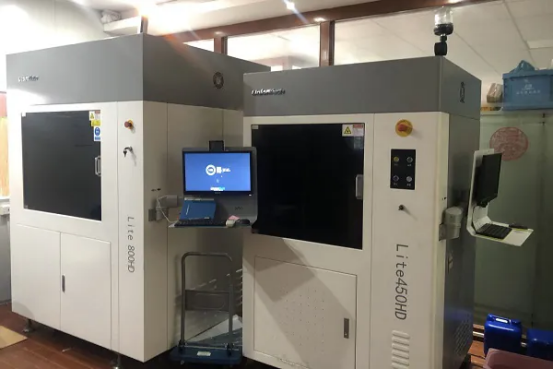
Modern equipment manufacturing demands a sophisticated balance between rapid structural innovation and optimal asset management. Industrial development groups frequently encounter significant friction when trying to transition a digital hardware concept into a physical test component using conventional tooling setups. Deploying custom plastic 3D printing frameworks alters this dynamic entirely, allowing original equipment manufacturers to materialize intricate housings, brackets, and internal ducting directly from software blueprints.
Overcoming Traditional Geometric Restrictions Through Additive Deposition
Traditional manufacturing methods like milling and molding enforce strict design parameters, requiring uniform wall thicknesses, draft angles, and simple cross-sections to ensure tool access. Industrial additive manufacturing subverts these requirements entirely by constructing components sequentially from the ground up. This unique deposition methodology allows for the seamless integration of internal voids, organic curvature, and complex interlocking networks.
Engineers can optimize parts based purely on fluid dynamics, thermal dissipation, or structural load paths rather than machining capabilities. Features such as integrated cooling channels that curve around internal electronics are easily realized. This geometric freedom allows development teams to consolidate multi-part assemblies into single, cohesive components, minimizing downstream assembly points.
Mitigating Capital Expense and Shielding Corporate Assets
Developing a new product line involves significant financial forecasting risks, particularly when committing capital to unverified physical components. Ordering traditional hard tooling during fluid design phases locks up considerable budgets in rigid hardware that cannot adapt to subsequent revisions. Additive polymer processing operates with zero specialized physical tooling, shifting the economic landscape in favor of flexibility.
Compressing Development Cycles to Secure Market Velocity
In highly competitive global marketplaces, the velocity at which an enterprise can iterate often determines its ultimate market penetration. Waiting weeks for hard tooling modifications to arrive stalls project momentum and creates major bottlenecks for cross-functional engineering teams. Direct digital fabrication compresses these multi-week fabrication schedules down to a matter of hours.
A revised component can be processed by slicing software, transmitted to industrial printing equipment, and fully completed overnight. This fast turnaround allows verification engineers to conduct physical fit-checks, aesthetic reviews, and basic functional tests in rapid succession. Eliminating hardware development bottlenecks ensures that subsequent manufacturing, certification, and distribution timelines remain completely on schedule.
Optimizing Weight Distribution Via Advanced Internal Architecture
Trimming excess mass from structural components is a major priority across aerospace, automotive, and handheld diagnostic equipment applications. Traditional subtractive processes cannot easily hollow out the interior of a solid block without removing vital outer structural walls. Additive polymer systems solve this engineering challenge by replacing solid internal mass with complex, customizable lattice structures.
Streamlining Inventory Management and Facilitating On Demand Logistics
Maintaining vast physical warehouses filled with slow-moving spare parts, obsolete housings, and component inventory incurs major corporate overhead costs. Additive manufacturing enables original equipment manufacturers to transition toward a highly efficient, completely digital supply chain model. Instead of storing physical plastic assets, enterprises maintain secure cloud repositories of verified three-dimensional design files.
When a replacement part or a low-volume custom component is required by a client, the specific file is retrieved and printed on demand. This lean logistical framework eliminates warehousing expenses, reduces material waste from overproduction, and ensures that legacy equipment can be supported indefinitely. On-demand fabrication enhances operational flexibility, allowing businesses to react instantly to changing market needs.
Enhancing Material Performance with Engineering Grade Polymers
Modern industrial additive equipment utilizes a diverse spectrum of advanced, high-performance thermoplastics designed to withstand challenging operational conditions. Materials such as flame-retardant polycarbonates, chemically resistant nylons, and ultra-rigid PEEK substrates provide exceptional mechanical stability. These engineered materials ensure that printed components perform reliably when exposed to high temperatures, friction, or environmental stress.
Achieving Aesthetic Precision and Seamless Component Integration
Visual perfection and ergonomic comfort are critical factors when establishing brand identity and securing positive user experience outcomes. Industrial additive platforms deliver consistent dimensional accuracy, ensuring that printed enclosures align flawlessly with internal circuit boards and mechanical fasteners. This precision prevents assembly friction and guarantees tight, dust-resistant seams across the finalized product.
Furthermore, these high-quality components are fully compatible with diverse secondary finishing treatments, including bead blasting, texturing, painting, and electroplating. This post-processing compatibility allows prototypes to mirror the visual appearance and surface feel of final mass-produced consumer goods closely. Creating visually stunning models accelerates executive presentations and helps secure early commercial stakeholder approvals.
Industrial Additive Solutions for Complex Commercial Scale-Ups
When transitioning complex equipment designs from initial concepts into reliable, short-run production assets, utilizing a professional manufacturing framework is paramount. APT-Mold provides high-quality industrial additive services structured explicitly to accelerate product development with precision and reliability. The modern workshop specializes in building precise components layer by layer from digital files, enabling complex geometries with minimal material waste.
APT‑Mold’s fabrication capabilities cover a wide range of engineering plastics tailored for rigorous automotive, medical, aerospace, and industrial applications. The facility utilizes advanced production systems to deliver custom plastic 3D‑printing solutions, supporting OEMs from early‑stage concept verification through to small‑batch manufacturing. This comprehensive service offering provides companies with a stable and efficient means of acquiring accurate polymer parts that comply with strict performance criteria.
Conclusion
Integrating additive polymer manufacturing into the core development cycle grants original equipment manufacturers the agility to innovate without facing paralyzing financial or geometric constraints. By removing initial tooling requirements, compressing iteration timelines, and supporting advanced internal lattice design, this methodology safeguards both engineering quality and corporate capital.
