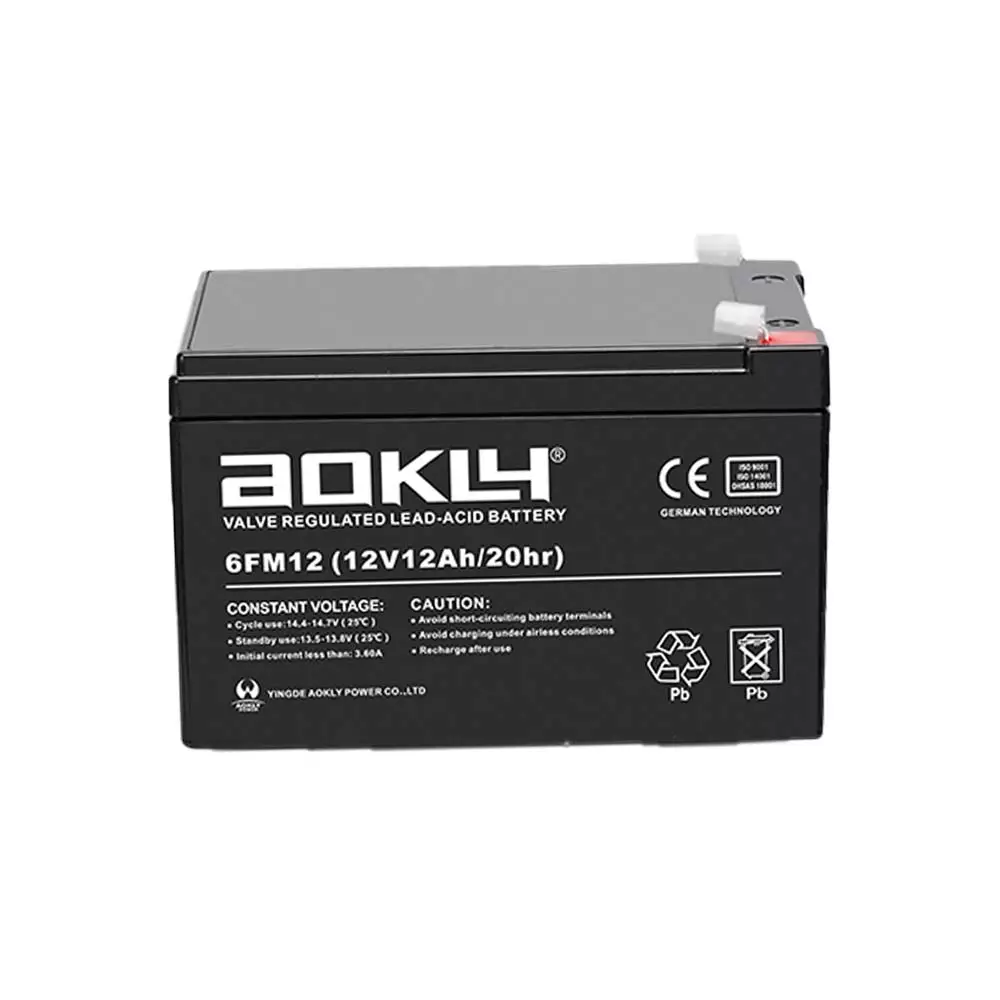
In backup power systems, telecommunications, and small-scale energy storage, the 12V VRLA battery remains a widely adopted solution due to its sealed design and operational reliability. Valve-regulated lead-acid (VRLA) batteries are engineered to minimize maintenance while delivering stable output under varying load conditions. However, achieving optimal performance and service life from a 12V VRLA battery depends on proper system design, charging practices, and environmental management. For users, applying best practices can significantly improve lifecycle value and operational stability.
Optimizing Charging and Operating Conditions
One of the most critical factors influencing the longevity of a 12V VRLA battery is correct charging control. Overcharging can accelerate water loss and internal degradation, while undercharging may lead to sulfation and reduced capacity. Using a charger with voltage regulation aligned to manufacturer specifications helps maintain battery health over time.
Temperature also plays a decisive role. Although many VRLA batteries are designed to operate within a range of approximately -20°C to 60°C, maintaining a stable ambient temperature near 25°C is recommended to achieve the intended design life. Additionally, systems that require frequent high-rate discharge should ensure that the selected 12V VRLA battery model supports strong discharge performance and efficient internal conductivity, which are often enhanced by compact internal structures and low-resistance designs.
Installation Practices and Maintenance Considerations
Proper installation directly affects both safety and efficiency. Ensuring secure terminal connections, adequate ventilation, and correct orientation helps maintain consistent performance. Advanced designs, such as those incorporating AGM separators, can reduce internal resistance and improve cycle life when installed correctly.
Routine inspection, although minimal for VRLA systems, remains necessary. Monitoring parameters such as voltage consistency, physical integrity, and discharge behavior allows early detection of potential issues. A well-designed 12V VRLA battery with high sealing efficiency—often exceeding 99%—can further reduce the risk of electrolyte loss and enhance operational reliability in critical applications.
Ensuring Long-Term Value Through Reliable Battery Solutions
Maximizing the performance of a 12V VRLA battery also depends on selecting a manufacturer with proven engineering and production capabilities. Guangdong Aokly Group Co., Ltd. is an established battery manufacturer with extensive experience in designing sealed lead-acid solutions for demanding applications. Its product range includes models such as the 6-FM-12 series, offering capacities from 4Ah to 20Ah, compact internal structures, and low self-discharge rates.
Aokly batteries are engineered with features such as improved AGM separators, high-strength ABS casing, and double terminal sealing technology, supporting durability and consistent performance. With a focus on reliability and practical design, Aokly provides dependable 12V VRLA battery solutions suitable for telecommunications, backup power, and industrial applications.
